

Fleet tire tracking software and TPMS are not the same tool. A TPMS monitors tire pressure and temperature in real time. Fleet tire tracking software manages the broader tire lifecycle, including inspections, tire history, rotations, retreads, removals, replacements, inventory, and tire cost data.
For commercial truck fleets in the United States, the strongest tire program usually needs both. TPMS helps drivers see tire pressure and temperature issues while the vehicle is operating. Tire tracking software helps the fleet document what happened before and after those alerts.
This guide compares fleet tire tracking software vs TPMS, explains where each one fits, and shows how Flotal by HawksHead and HawksHead TPMS systems can work together for better fleet tire visibility.
What Is TPMS?
TPMS stands for tire pressure monitoring system. It is designed to monitor tire pressure and, depending on the system, tire temperature. A direct TPMS uses sensors installed on or in the tire valve area to transmit tire data to a monitor.
For commercial trucks, trailers, RVs, buses, and heavy-duty vehicles, TPMS helps drivers detect issues such as:
- Low tire pressure.
- High tire pressure.
- Rapid pressure loss.
- Slow leaks.
- High tire temperature.
- Sensor communication issues.
NHTSA states that TPMS is not a substitute for regular tire maintenance, which means fleets still need inspections, pressure checks, tread checks, and service records. Source: NHTSA TireWise
What Is Fleet Tire Tracking Software?
Fleet tire tracking software is used to manage tire records across multiple vehicles, trailers, tire positions, and assets.
Instead of only showing current tire pressure, tire tracking software helps fleet managers track the complete tire lifecycle:
- Tire ID or serial number.
- Vehicle or asset assignment.
- Tire position history.
- Inspection records.
- Tread depth readings.
- Pressure check history.
- Rotations and movements.
- Repairs and removals.
- Retreads and casing history.
- Replacements.
- Inventory status.
- Tire cost per mile.
Flotal by HawksHead is a fleet tire management software built to help commercial fleets organize tire inspections, tire history, rotations, retreads, removals, replacements, inventory, and cost visibility across multiple assets.
Fleet Tire Tracking Software vs TPMS: The Main Difference
The simplest way to compare them is this:
- TPMS tells you what is happening now.
- Fleet tire tracking software tells you what has happened over time.
A TPMS can warn a driver that a tire is losing pressure. Tire tracking software can help the fleet record the inspection, repair, removal reason, retread status, position history, and cost impact related to that tire.
That difference matters because tire cost control is not only about catching one alert. It is about understanding patterns across the fleet.
Comparison: Fleet Tire Tracking Software vs TPMS
| Feature | TPMS | Fleet Tire Tracking Software |
|---|---|---|
| Main purpose | Monitor tire pressure and temperature | Track tire lifecycle and cost data |
| Time focus | Real-time alerts | Historical records and maintenance planning |
| Driver value | Warns about pressure or temperature issues while driving | Supports inspections, maintenance records, and follow-up actions |
| Fleet manager value | Helps identify active tire alerts | Helps analyze tire history, removals, retreads, inventory, and cost per mile |
| Best use case | Pressure and temperature monitoring | Fleet tire lifecycle management |
| Cost control role | Helps catch inflation and temperature issues earlier | Helps track tire performance, replacement timing, and cost per mile |
Why TPMS Alone Is Not Enough for Fleet Tire Management
TPMS is valuable, but it is not a complete tire management system by itself.
A TPMS may alert the driver when a tire is underinflated or overheating. That alert is important. But after the alert, the fleet still needs to answer operational questions:
- Was the tire inspected?
- Was the tire repaired?
- Was the tire removed?
- Was the tire retreaded?
- Was the tire replaced too early?
- Has this position had repeated tire issues?
- Did this tire deliver acceptable cost per mile?
- Did the maintenance team close the issue?
Those questions require tire tracking software, not only a dashboard alert.
Why Tire Tracking Software Alone Is Not Enough
Tire tracking software helps manage records, but software alone cannot see tire pressure and temperature while the truck is moving.
If a commercial truck tire loses pressure during a route, the driver needs an active warning. Software records are useful, but they do not replace real-time tire monitoring.
This is why fleets should not treat TPMS and tire tracking software as competing tools. They solve different parts of the same tire cost problem.
How TPMS and Fleet Tire Tracking Software Work Together
The best fleet tire management process connects real-time tire visibility with historical tire records.
Here is the workflow:
- A TPMS sensor detects low pressure, high pressure, rapid pressure loss, or high temperature.
- The driver receives an alert on the monitor.
- The vehicle is inspected by the driver, technician, or maintenance team.
- The inspection and tire condition are documented in tire tracking software.
- The fleet records the repair, rotation, removal, retread, replacement, or follow-up action.
- The tire record becomes part of long-term cost and lifecycle analysis.
That is how fleets turn a tire alert into a documented maintenance decision.
FMCSA-sponsored field testing found that tire pressure monitoring and maintenance systems improved motor carrier fuel economy by about 1.4% to 1.8%. For fleets, this supports the business case for tire inflation visibility, especially when monitoring is connected to a disciplined maintenance process. Source: U.S. DOT ITS Knowledge Resources
When Should a Fleet Prioritize TPMS?
A fleet should prioritize TPMS when the main problem is active tire visibility during operation.
TPMS is especially important when the fleet needs to monitor:
- Commercial truck tire pressure.
- Trailer tire pressure.
- Long-haul highway vehicles.
- High-temperature tire conditions.
- Slow leaks or rapid pressure loss.
- Multi-wheel commercial vehicles.
- Long vehicles where rear tire issues may be harder to detect.
For commercial trucks, explore the Semi Truck TPMS collection. For larger multi-wheel setups, the TALON X-TREME 38-Wheel TPMS System can support heavy-duty applications with more monitored wheel positions.
When Should a Fleet Prioritize Tire Tracking Software?
A fleet should prioritize tire tracking software when the main problem is lack of tire lifecycle visibility.
Tire tracking software is especially important when the fleet needs to manage:
- Tire inspection records.
- Tread depth tracking.
- Position history.
- Rotation planning.
- Retread and casing history.
- Removal reasons.
- Inventory status.
- Replacement planning.
- Tire cost per mile.
- Multiple vehicles, trailers, or assets.
For this use case, Flotal Fleet Tire Management Software is the correct internal destination because it supports fleet tire records, maintenance decisions, and lifecycle tracking beyond pressure alerts.
Which One Should Commercial Truck Fleets Choose?
Commercial truck fleets should not choose between TPMS and fleet tire tracking software as if they were the same category.
Choose TPMS when you need real-time pressure and temperature monitoring.
Choose fleet tire tracking software when you need inspections, tire history, retreads, inventory, replacement tracking, and cost per mile visibility.
Use both when you want a complete tire program that connects real-time tire alerts with long-term tire lifecycle management.
Recommended Setup: TPMS + Flotal Tire Management Software
For commercial fleets, the recommended setup is HawksHead TPMS hardware plus Flotal tire management software.
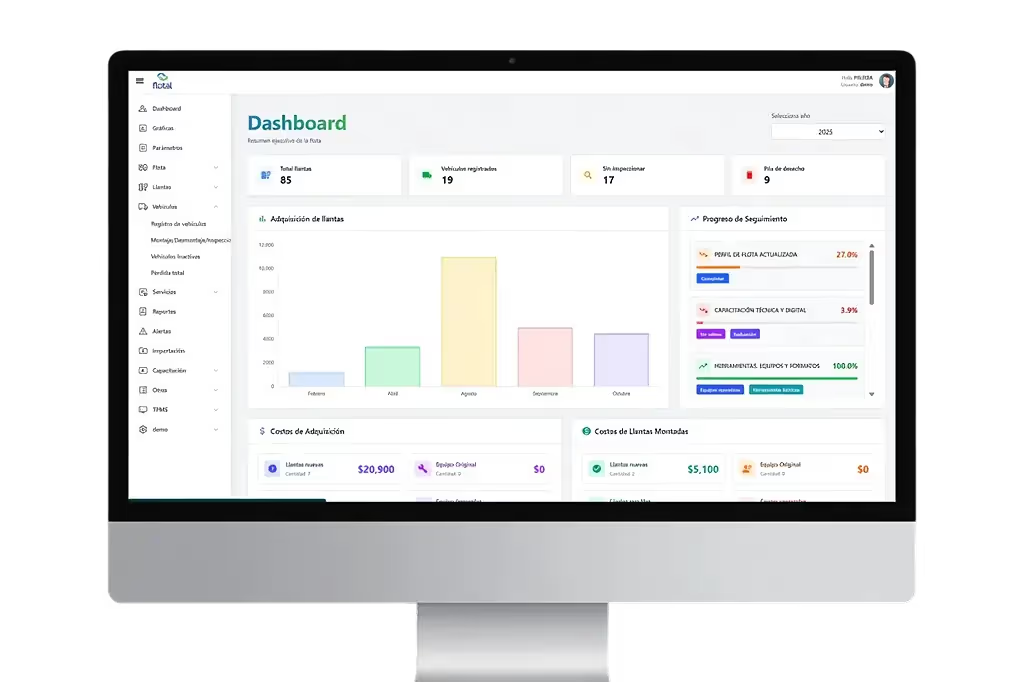
RECOMMENDED FLEET SETUP
TPMS + Flotal Tire Tracking Software
Use TPMS for real-time tire pressure and temperature alerts, then use Flotal to track tire inspections, history, retreads, removals, replacements, inventory, and cost per mile.
- Real-time pressure and temperature visibility
- Fleet-wide tire lifecycle tracking
- Inspection, rotation and replacement records
- Retread, inventory and cost per mile visibility
Common Mistakes When Comparing TPMS and Tire Tracking Software
Fleet managers can make the wrong decision if they compare TPMS and tire tracking software as direct replacements.
Common mistakes include:
- Expecting TPMS to manage tire inventory.
- Expecting software to replace real-time pressure alerts.
- Ignoring tire position history.
- Not connecting TPMS alerts to maintenance actions.
- Tracking tire cost without tracking tire lifecycle events.
- Using spreadsheets instead of structured tire records.
- Replacing tires without documenting removal reasons.
The correct approach is to define what problem the fleet is trying to solve: real-time tire visibility, lifecycle tracking, or both.
Final Recommendation
Fleet tire tracking software vs TPMS is not an either-or decision for commercial fleets.
TPMS helps detect pressure and temperature issues while the vehicle is operating. Fleet tire tracking software helps manage the tire lifecycle after those alerts: inspections, rotations, repairs, removals, retreads, replacements, inventory, and cost data.
For fleets that want stronger tire cost control, the best approach is to use both. HawksHead TPMS supports real-time tire pressure and temperature monitoring, while Flotal helps organize tire history, tire maintenance records, retread tracking, inventory, and cost per mile visibility.
If your fleet needs better tire visibility across trucks, trailers, buses, or heavy-duty assets, request a Flotal demo and connect tire monitoring with tire lifecycle management.
Frequently Asked Questions About Fleet Tire Tracking Software vs TPMS
Is fleet tire tracking software the same as TPMS?
No. TPMS monitors tire pressure and temperature in real time. Fleet tire tracking software manages tire history, inspections, rotations, retreads, replacements, inventory, and tire cost data.
Which is better for commercial fleets, TPMS or tire tracking software?
Neither one replaces the other. TPMS is better for real-time pressure and temperature alerts. Tire tracking software is better for lifecycle records, inspections, retreads, inventory, and cost per mile. Commercial fleets usually benefit from using both.
Can TPMS reduce fleet tire costs?
TPMS can help reduce avoidable tire costs by warning drivers about pressure and temperature issues earlier. It works best when alerts are connected to tire inspections and maintenance follow-up.
Can tire tracking software monitor tire pressure?
Tire tracking software is mainly used for tire records, inspections, maintenance history, and cost data. Real-time pressure monitoring usually requires TPMS hardware.
Why should fleets connect TPMS alerts to tire tracking software?
Connecting TPMS alerts to tire tracking software helps fleets document what happened after the alert, including inspection, repair, removal, replacement, or retread action.
Does TPMS replace regular tire inspections?
No. NHTSA states that TPMS is not a substitute for regular tire maintenance. Fleets should still perform inspections, pressure checks, tread checks, and maintenance reviews.
What does Flotal do that TPMS does not?
Flotal helps fleets track tire inspections, tire history, rotations, retreads, removals, replacements, inventory, and tire cost per mile. TPMS focuses on real-time pressure and temperature monitoring.
What HawksHead TPMS works for commercial truck fleets?
Commercial fleets can review the HawksHead Semi Truck TPMS collection and heavy-duty TALON systems, including TALON X-TREME for larger multi-wheel setups.
Should a fleet use both TPMS and Flotal?
Yes, if the fleet wants both real-time tire visibility and long-term tire lifecycle control. TPMS helps monitor pressure and temperature, while Flotal helps manage tire history, inspections, retreads, replacements, and cost data.

