

Top Mining TPMS for Large Fleets: What to Look For
What to Look for Before Buying
Large mining fleets need more than a basic tire pressure display. A mine site may operate haul trucks, mining dump trucks, loaders, graders, service trucks, quarry vehicles, industrial equipment, and other OTR assets. Each vehicle may have different tire sizes, pressure ranges, valve configurations, operating cycles, and maintenance requirements.
A top mining TPMS for large fleets should help operators and maintenance teams monitor tire pressure, tire temperature, sensor communication, slow leaks, rapid air loss, and abnormal heat conditions across demanding mining environments.
For large fleets, the buying decision is not only about which TPMS works on one haul truck. The better question is: can this TPMS strategy scale across multiple mining vehicles, tire positions, service teams, and maintenance routines?
This guide explains what to look for before buying a mining TPMS for large fleets, how to compare tire monitoring features, and how HawksHead Mining and Industrial TPMS systems can support heavy-duty OTR tire monitoring.
What Is a Mining TPMS for Large Fleets?
A mining TPMS is a tire pressure monitoring system designed to monitor tire pressure and temperature on mining vehicles, OTR tires, industrial equipment, haul trucks, and heavy-duty fleet assets.
For a small operation, a TPMS may only need to monitor one vehicle. For a large mining fleet, the system needs to support more demanding conditions:
- Multiple vehicle types.
- Large tire sizes.
- High-value OTR tires.
- Rough haul roads.
- Extreme heat and cold.
- Dust, vibration, mud, and debris.
- Long operating shifts.
- Large bore valve requirements.
- Different pressure ranges across equipment types.
- Maintenance teams that need serviceable components.
That is why a mining TPMS should be evaluated as part of a fleet tire monitoring process, not only as a single-vehicle accessory.
Why Large Mining Fleets Need Tire Pressure and Temperature Monitoring
Mining tires are expensive, heavily loaded, and exposed to severe conditions. Pressure and temperature problems can affect tire life, equipment availability, site safety, and maintenance planning.
A tire can be underinflated, overheating, losing pressure, or developing internal stress before the issue is obvious during a visual walkaround. TPMS gives operators and maintenance teams additional visibility while equipment is working.
For large mining fleets, TPMS can help identify:
- Low tire pressure.
- High tire pressure.
- Slow leaks.
- Rapid air loss.
- High tire temperature.
- Abnormal tire behavior by position.
- Sensor communication problems.
- Recurring tire issues by vehicle type.
RIMEX TyreSense and Michelin MEMS both position mining TPMS around pressure and temperature monitoring, fleet visibility, operational alerts, and reduced downtime. That confirms the main SERP pattern: buyers want tire visibility for the site, not just a basic pressure gauge. :chatgpt-content-reference{index="2"} :chatgpt-content-reference{index="3"}
Top Features to Look for in a Mining TPMS
Before buying a mining TPMS for a large fleet, compare the system around the conditions your vehicles actually face.
1. Pressure and Temperature Monitoring
The best mining TPMS systems monitor both tire pressure and tire temperature. Pressure readings help detect underinflation, overinflation, slow leaks, and rapid pressure loss. Temperature readings help identify abnormal heat conditions that may be related to load, haul road conditions, braking stress, underinflation, wheel-end issues, or duty cycle.
For mining operations, pressure alone is not enough. Tire temperature is one of the most important signals for OTR tire protection because heat can build before external damage is visible.
2. Heavy-Duty OTR Sensor Compatibility
Mining and industrial vehicles need sensors that match the application. Standard light-duty TPMS sensors are not always suitable for mining haul trucks, loaders, graders, and OTR equipment.
Before buying, confirm that the system supports the tire type, pressure range, valve hardware, operating environment, and service method required by the equipment.
For HawksHead applications, review Mining and Industrial TPMS Systems to match the setup to heavy-duty tire monitoring requirements.
3. Large Bore Valve and T-Valve Support
Mining and OTR tires may use large bore valves or specialized valve configurations. The TPMS setup should match those valve requirements without making inflation or inspection harder for tire technicians.
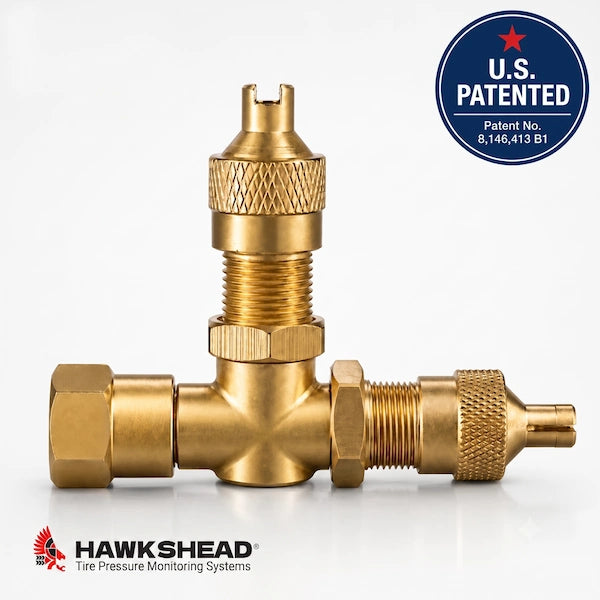
Large bore sensors and T-valve adapters can help support heavy-duty monitoring while preserving access for pressure checks and service.
For replacement components and service parts, review TPMS Accessories and Service Kits.
4. Multi-Wheel and Multi-Asset Flexibility
A large mining fleet does not usually have one vehicle type. It may include haul trucks, dump trucks, loaders, graders, support trucks, quarry vehicles, construction equipment, and industrial vehicles.
The TPMS strategy should support different tire positions and equipment types while keeping the maintenance process as standardized as possible.
For larger monitored configurations, the TALON X-TREME 38-Wheel TPMS System may be a better fit when more tire positions need to be monitored.
5. Signal Reliability Across Large Equipment
Signal reliability matters on large metal-heavy equipment. If rear sensors, distant sensors, or sensors on long equipment do not communicate reliably with the monitor, the system may need signal support.
For compatible TALON systems, the Hard-Wired TPMS Signal Booster can help improve communication between distant sensors and the monitor.
6. Serviceable Components
Large mining fleets need maintenance continuity. If a sensor battery, O-ring, valve part, or sensor component needs service, the fleet should not have to replace the entire system.
Before buying, confirm that replacement sensors, O-rings, valve adapters, batteries, and service kits are available. This is especially important for mines that operate far from suppliers or service centers.
7. Fleet Standardization
Large fleets should avoid one-off TPMS setups whenever possible. Standardization helps maintenance teams manage sensors, monitors, spare parts, training, alert response, and troubleshooting.
A standardized TPMS process can help the fleet answer:
- Which vehicles use which sensor type?
- Which assets require large bore adapters?
- Which vehicles need a signal booster?
- Which sensor batteries or service kits should be stocked?
- Which pressure and temperature thresholds apply by equipment type?
Mining TPMS for Haul Trucks, Dump Trucks, and Heavy Equipment
A mining TPMS should be selected by equipment application. A haul truck may not need the same setup as a service truck, and a loader may not use the same tire pressure range as a mining dump truck.
Common mining and industrial applications include:
- Mining haul trucks.
- Mining dump trucks.
- Loaders.
- Graders.
- Service trucks.
- Quarry vehicles.
- Construction equipment.
- Industrial vehicles.
- OTR tire applications.
If your main application is haul trucks, read the related guide: Best TPMS for Mining Haul Trucks and OTR Equipment.
If your operation needs wireless tire monitoring across mixed equipment types, read: Best Wireless TPMS for Mining Equipment.
Mining TPMS Buying Checklist for Large Fleets
Use this checklist before choosing a mining TPMS for a large fleet.
- List every vehicle and equipment type that needs tire monitoring.
- Identify the number of tire positions per asset.
- Confirm each tire pressure range.
- Confirm whether large bore valves are used.
- Check whether T-valve adapters are needed for service access.
- Confirm whether pressure and temperature are monitored.
- Define pressure alert thresholds by asset type.
- Define temperature alert thresholds by asset type.
- Confirm monitor placement and sensor communication distance.
- Identify which vehicles may require a signal booster.
- Confirm replacement sensor availability.
- Stock service kits, O-rings, batteries, and valve components.
- Standardize the installation and inspection process.
- Train operators on TPMS alerts and response steps.
- Train maintenance teams on sensor service and troubleshooting.
TPMS vs Manual Tire Checks in Mining Fleets
Manual tire checks are still necessary in mining operations. TPMS does not replace trained tire technicians, visual inspections, tire service procedures, haul road management, or mine safety practices.
However, manual checks only show tire condition at the time of inspection. A TPMS adds live pressure and temperature visibility while equipment is operating.
| Area | Manual Tire Checks | Mining TPMS |
|---|---|---|
| Timing | Before or during inspection | During equipment operation |
| Main value | Physical tire and valve inspection | Live pressure and temperature alerts |
| Best for | Tread, sidewall, valve, rim, and visible damage checks | Slow leaks, rapid pressure loss, and high temperature warnings |
| Limitation | Does not monitor tire conditions during the full operating cycle | Does not replace tire inspection, service, or safety procedures |
The right fleet process uses both. Manual checks confirm physical condition. TPMS adds tire pressure and temperature visibility while the equipment is working.
How TPMS Supports Downtime Reduction in Mining Fleets
In mining, tire-related downtime can affect more than one vehicle. A stopped haul truck can slow production cycles, create maintenance bottlenecks, and affect site productivity.
A TPMS supports downtime reduction by giving operators and maintenance teams earlier visibility into tire problems. Instead of discovering a damaged tire after the fact, teams can respond to pressure loss or temperature rise while the issue is still developing.
Michelin describes mining TPMS as a tool for avoiding unplanned downtime and optimizing mining tire performance, while RIMEX emphasizes event monitoring, analytics, and tire monitoring across entire mining sites. :chatgpt-content-reference{index="4"} :chatgpt-content-reference{index="5"}
Recommended HawksHead Setup for Mining Fleets
For mining and industrial tire monitoring, HawksHead recommends selecting the TPMS setup based on equipment type, pressure range, tire position count, valve configuration, and operating environment.
MINING FLEET TPMS
Build a TPMS Setup for Large Mining Fleets
Monitor tire pressure and temperature across mining haul trucks, dump trucks, OTR tires, industrial vehicles, and heavy-duty fleet equipment.
- Mining and industrial TPMS systems
- Large bore sensor and valve support
- Signal booster support for large equipment
- Replacement sensors and service kits
How Fleet Tire Management Software Fits Mining TPMS
TPMS gives operators and maintenance teams real-time pressure and temperature visibility. Fleet tire management software helps the operation manage the longer tire lifecycle: inspections, tire history, rotations, removals, retreads, replacements, inventory, and cost tracking.
For large mining fleets, the two should work together. TPMS helps identify what is happening now. Tire management software helps document what happened next.
For example, if a haul truck shows a high-temperature alert, the fleet still needs to record the inspection, corrective action, removal decision, tire history, and future maintenance plan.
For tire lifecycle records, inspections, retreads, and cost visibility, review Fleet Tire Management Software.
Common Mistakes When Buying Mining TPMS for Large Fleets
Large fleets should avoid buying TPMS based only on price or sensor count. The wrong setup can create maintenance problems later.
Common mistakes include:
- Choosing a system without confirming pressure range.
- Ignoring tire temperature monitoring.
- Using sensors that do not match the valve hardware.
- Not planning for large bore valve applications.
- Forgetting signal distance on large equipment.
- Not stocking replacement sensors and service parts.
- Using different TPMS setups across similar vehicles without a standard process.
- Not training operators on alert response.
- Not connecting TPMS alerts to tire inspections and maintenance records.
Final Recommendation
The top mining TPMS for large fleets should monitor both tire pressure and tire temperature, support heavy-duty OTR tire applications, match the correct valve hardware, provide reliable sensor communication, and remain serviceable over time.
For large mining operations, the strongest TPMS strategy is not a one-vehicle setup. It is a standardized tire monitoring process that can support haul trucks, dump trucks, loaders, graders, service trucks, quarry vehicles, and industrial equipment across the site.
Use TPMS to monitor real-time pressure and temperature. Use manual inspections to confirm tire, valve, rim, and tread condition. Use fleet tire management software to track tire history, repairs, removals, retreads, replacements, inventory, and cost visibility.
Start with HawksHead Mining and Industrial TPMS Systems to compare tire monitoring setups for mining fleets, OTR equipment, large bore valves, and heavy-duty tire applications.
Frequently Asked Questions About Mining TPMS for Large Fleets
What is the top mining TPMS for large fleets?
The top mining TPMS for large fleets is a system that monitors both tire pressure and tire temperature, supports heavy-duty OTR tire applications, works with the correct valve hardware, communicates reliably across large equipment, and has serviceable components for long-term fleet maintenance.
What should a mining TPMS monitor?
A mining TPMS should monitor tire pressure, tire temperature, slow pressure loss, rapid air loss, sensor communication, and tire position alerts across mining haul trucks, dump trucks, OTR equipment, and industrial vehicles.
Why do mining fleets need tire temperature monitoring?
Mining fleets need tire temperature monitoring because heat can build from heavy loads, haul road conditions, braking stress, underinflation, overloading, and long operating cycles. Temperature alerts add another layer of tire visibility.
Is TPMS enough for mining tire safety?
No. TPMS supports tire visibility, but it does not replace trained tire inspections, mine safety procedures, haul road maintenance, tire service practices, or operator judgment.
Do large mining fleets need signal boosters?
Some large mining vehicles may need signal support if sensors are far from the monitor or if equipment structure affects communication. A signal booster can help improve communication on compatible TALON systems.
Can one TPMS system work across a mining fleet?
One TPMS family can often be standardized across a mining fleet, but each asset may require different sensors, valve adapters, pressure settings, or signal support depending on the equipment type and tire application.
What is the difference between mining TPMS and regular TPMS?
Mining TPMS is designed around heavier equipment, OTR tires, higher pressure requirements, large bore valves, harsh operating environments, and fleet-level service needs. Regular light-duty TPMS may not fit these requirements.
What HawksHead products support mining TPMS?
HawksHead supports mining and industrial tire monitoring through Mining and Industrial TPMS Systems, TALON X-TREME 38 for larger monitored configurations, Hard-Wired TPMS Signal Booster support, and TPMS Accessories and Service Kits.