

TPMS Valve Stem Guide: Inflate Without Removing the Sensor
TPMS Valve Stem
A TPMS valve stem is the connection point where tire pressure monitoring hardware, tire inflation, and valve service meet. For many drivers using external TPMS cap sensors, the valve stem becomes a daily maintenance issue because the sensor must often be removed before adding air.
That is exactly the problem a TPMS T-Valve is designed to solve. A TPMS T-Valve adapter gives the tire a separate inflation port, allowing the external TPMS sensor to stay installed while you add or release air.
The HawksHead TPMS T-Valve Adapter for External Sensors is a patented U.S. product designed to let you inflate a tire without removing the external TPMS cap sensor. This makes routine pressure checks and inflation easier for RVs, trailers, semi trucks, dual wheels, and commercial tire setups.
What Is a TPMS Valve Stem?
A TPMS valve stem can mean different things depending on the type of tire pressure monitoring system being used.
In some vehicles, the TPMS valve stem is part of an internal OEM sensor mounted inside the wheel. In external TPMS systems, the valve stem is where the external cap sensor installs. In HawksHead applications, the valve area may also include a T-Valve adapter or T-Valve stem that makes inflation easier without removing the sensor.
This distinction matters because not every search for “TPMS valve stem” means the same thing. Some users are looking for a replacement valve. Others are looking for a sensor service kit. But many RV, trailer, truck, and fleet users are trying to solve one practical problem: how to add air without removing the TPMS sensor every time.
TPMS Valve Stem vs External TPMS Sensor
The valve stem and the external TPMS sensor are not the same part.
- Valve stem: The tire valve used for inflation and pressure access.
- External TPMS sensor: A cap-style sensor that installs on the valve stem and transmits pressure and temperature data.
- TPMS T-Valve adapter: A valve adapter that adds a separate inflation access point while keeping the external sensor installed.
An external TPMS cap sensor is useful because it can be installed without removing the tire from the wheel. But once it is installed, it occupies the normal inflation point. That is why many drivers remove the sensor every time they need to add air.
A T-Valve adapter changes that workflow by giving the tire a second access point.
The Problem: Removing Sensors Every Time You Inflate
With a standard external TPMS sensor setup, the inflation process often looks like this:
- Remove the external TPMS sensor from the valve stem.
- Connect the inflator or pressure gauge.
- Add or release air.
- Disconnect the inflator.
- Reinstall the TPMS sensor.
- Confirm that the sensor is reading again.
That process may be acceptable on one tire, but it becomes inconvenient on vehicles with multiple tire positions.
It is especially frustrating on:
- RVs and motorhomes.
- Travel trailers and fifth wheels.
- Semi trucks.
- Dual wheel setups.
- Commercial trucks.
- Fleet vehicles.
- Industrial and large bore tire applications.
Every extra step increases service time. It also increases the chance of dropping a sensor, damaging threads, forgetting to reinstall a sensor, or creating a poor seal after repeated removal.
What Is a TPMS T-Valve?
A TPMS T-Valve is a valve adapter or valve stem with two functional access points: one side for the external TPMS sensor and another side for inflation.
Instead of removing the external cap sensor every time you need to add air, the sensor stays installed. The inflator connects to the separate port, and air reaches the tire through the T-Valve body.
This is the core advantage of the HawksHead TPMS T-Valve Adapter for External Sensors: it is built for external TPMS sensor users who want easier tire inflation without removing the sensor.
How Does a TPMS T-Valve Work?
A TPMS T-Valve works by separating the sensor connection from the inflation access point.
1. The External TPMS Sensor Stays Installed
The external TPMS cap sensor remains mounted on one side of the valve. This allows the sensor to keep its position on the tire instead of being removed during every inflation check.
2. The Inflator Connects to the Side Port
The T-Valve gives you a separate access point for the air chuck, pressure gauge, or inflator. That side port is used for adding or releasing air.
3. Air Reaches the Tire Through the Valve Body
Air flows through the T-Valve body into the tire while the sensor remains installed. This reduces the number of steps required during routine tire pressure maintenance.
Why HawksHead T-Valves Are Different
HawksHead T-Valve adapters are designed around a specific use case: external TPMS sensors.
The product is not just a generic valve part. The HawksHead TPMS T-Valve Adapter for External Sensors is a patented U.S. adapter designed to allow tire inflation without removing the external TPMS cap sensor.
That matters because many external TPMS users want the benefits of real-time tire pressure and temperature monitoring, but they do not want to remove the sensor every time pressure needs to be adjusted.
HawksHead also offers related valve options for different applications, including TPMS T-Valve Stems for External Sensors, TPMS Valve Stems and T-Valve Adapters, and heavy-duty valve solutions for industrial or large bore applications.
Where TPMS T-Valves Are Most Useful
TPMS T-Valves are useful anywhere external TPMS sensors are installed and tire inflation access needs to stay simple.
RVs and Motorhomes
RVs often have multiple tires, tight valve access, and pressure checks before long trips. A T-Valve makes it easier to adjust tire pressure without removing each external TPMS sensor.
For RV tire monitoring, review RV TPMS systems and match your setup with the correct valve hardware.
Travel Trailers and Fifth Wheels
Travel trailer and fifth wheel owners often use external TPMS sensors because they are easy to install and monitor while towing. A T-Valve adapter helps simplify inflation during pre-trip checks, campground stops, and routine maintenance.
Semi Trucks and Dual Wheels
Semi trucks and dual wheel setups can be harder to service because of wheel position, access angle, and the number of tires involved. A T-Valve can reduce the steps needed to add air while keeping the external sensor installed.
For commercial truck applications, review Semi Truck TPMS systems.
Commercial Fleets
For fleets, repeatable maintenance matters. Removing and reinstalling sensors across multiple vehicles takes time. T-Valves help standardize tire pressure checks by giving technicians direct inflation access without disturbing the sensor position.
Mining and Industrial Tires
Heavy-duty and industrial tire applications may require large bore valve hardware or specialized T-Valve options. For those applications, review Mining and Industrial TPMS Systems and confirm the correct valve setup for the tire and equipment.
TPMS T-Valve Adapter vs TPMS T-Valve Stem
HawksHead offers different T-Valve style solutions depending on the vehicle and wheel setup.
| Option | Best For | Main Benefit |
|---|---|---|
| TPMS T-Valve Adapter | Adding T-Valve function to an external sensor setup | Inflate without removing the external TPMS cap sensor |
| TPMS T-Valve Stem | Wheel setups where a dedicated T-Valve stem is preferred | Keeps sensor installed while still giving tire inflation access |
| Large Bore T-Valve Adapter | Mining, industrial and heavy-duty tire applications | Supports external TPMS use on large bore tire valves |
The right product depends on your wheel, valve access, tire application, pressure range, and sensor setup. If you are using external TPMS cap sensors and want easier inflation, start with the HawksHead TPMS T-Valve Adapter for External Sensors.
Do You Still Need Regular Tire Maintenance?
Yes. A TPMS T-Valve makes inflation easier, but it does not replace tire maintenance.
NHTSA states that TPMS is not intended to replace regular tire maintenance. Drivers and fleets should still check tire pressure, inspect tread depth, look for visible tire damage, check valve condition, and maintain tires according to the vehicle and tire manufacturer’s recommendations.
The value of a T-Valve is that it makes one part of that maintenance process easier: adding or adjusting air without removing the external TPMS sensor.
Benefits of a TPMS T-Valve for External Sensors
A TPMS T-Valve gives external sensor users a more practical tire maintenance workflow.
Main benefits include:
- Inflate the tire without removing the external TPMS sensor.
- Reduce repeated sensor removal and reinstallation.
- Keep the sensor in place during routine pressure checks.
- Make tire inflation easier on RVs, trailers, trucks, and dual wheels.
- Reduce time spent servicing multiple tire positions.
- Support better pressure maintenance discipline.
- Help avoid leaving a sensor off after inflation.
- Support a cleaner TPMS setup for external cap sensors.
When Should You Use a TPMS T-Valve?
You should consider a TPMS T-Valve if you use external TPMS cap sensors and often need to adjust tire pressure.
A T-Valve is especially useful if:
- You remove sensors frequently to add air.
- You have several tires to check before a trip.
- You drive an RV, trailer, fifth wheel, or semi truck.
- You have dual wheels or hard-to-access valve stems.
- You want to keep the external TPMS sensor installed during inflation.
- You manage a fleet and want faster pressure checks.
- You want a cleaner routine for tire maintenance.
Recommended Product: HawksHead TPMS T-Valve Adapter for External Sensors
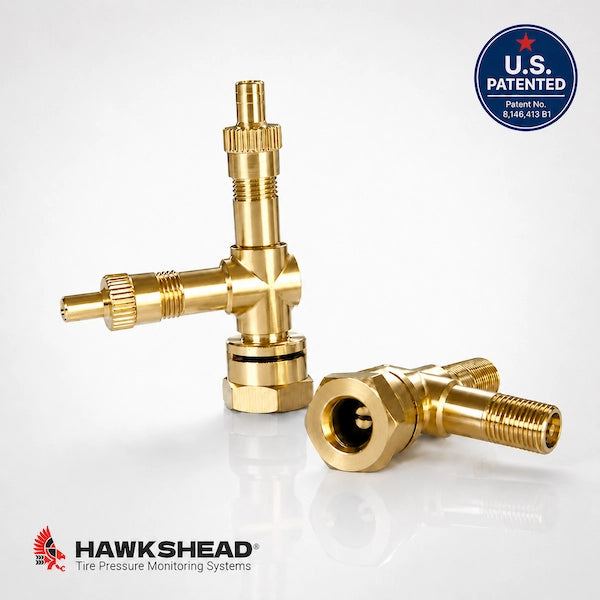
PATENTED TPMS T-VALVE ADAPTER
Inflate Without Removing the External Sensor
The HawksHead TPMS T-Valve Adapter is designed for external TPMS cap sensors, giving you a separate inflation port so the sensor can stay installed during tire inflation.
- Inflate without removing the external TPMS sensor
- Useful for RVs, trailers, trucks and dual wheels
- Supports routine pressure checks and maintenance
- Patented U.S. T-Valve adapter design
TPMS Valve Stem Buying Checklist
Before choosing a TPMS valve stem, T-Valve stem, or T-Valve adapter, confirm these details:
- Are you using internal TPMS sensors or external TPMS cap sensors?
- Do you need to inflate without removing the external sensor?
- Is your wheel setup better suited for a T-Valve adapter or T-Valve stem?
- Do you have standard valve stems, metal valve stems, dual wheels, or large bore valves?
- Is the valve access easy or difficult?
- Does your application involve RVs, trailers, trucks, fleets, or industrial tires?
- Do you need replacement seals, O-rings, or valve service parts?
- Does your tire pressure range match the TPMS system and valve hardware?
For additional valve hardware and service components, review TPMS Valve Stems and T-Valve Adapters or TPMS Accessories and Service Kits.
Common Mistakes with TPMS Valve Stems and External Sensors
Many TPMS valve problems come from choosing the wrong part or using the wrong setup for the vehicle.
Common mistakes include:
- Confusing an OEM internal TPMS valve stem with an external sensor T-Valve adapter.
- Removing the external TPMS sensor every time air is needed, even when a T-Valve would simplify the process.
- Using a valve setup that makes inflation difficult on dual wheels.
- Ignoring valve stem condition during tire inspections.
- Not checking for leaks after installing valve hardware.
- Forgetting to reinstall the TPMS sensor after inflation.
- Using light-duty valve hardware on heavy-duty or industrial applications.
Final Recommendation
If you use external TPMS cap sensors, a TPMS T-Valve is one of the most practical upgrades you can add to your tire monitoring setup.
The main benefit is simple: you can inflate the tire without removing the external sensor. That makes routine pressure checks faster and cleaner for RVs, travel trailers, fifth wheels, semi trucks, dual wheels, and fleet vehicles.
The HawksHead TPMS T-Valve Adapter for External Sensors is the recommended product when you want to keep the external sensor installed while adding or releasing air through a separate inflation port.
Use TPMS to monitor pressure and temperature. Use regular inspections to check tire condition. Use the right TPMS valve stem or T-Valve adapter to make tire inflation easier and more consistent.
Frequently Asked Questions About TPMS Valve Stems
What is a TPMS valve stem?
A TPMS valve stem is the valve area connected to a tire pressure monitoring setup. It may refer to an OEM internal sensor valve stem, a replacement valve stem, or a T-Valve adapter used with external TPMS cap sensors.
What is a TPMS T-Valve?
A TPMS T-Valve is a valve adapter or valve stem that creates a separate inflation access point while allowing the external TPMS sensor to remain installed.
Can you inflate a tire without removing the TPMS sensor?
Yes, if you use the correct T-Valve adapter or T-Valve stem for external TPMS sensors. The HawksHead TPMS T-Valve Adapter is designed to allow tire inflation without removing the external TPMS cap sensor.
Do external TPMS sensors have to be removed to add air?
With a standard valve stem setup, external TPMS cap sensors usually need to be removed before adding air. With a T-Valve adapter, the sensor can stay installed while the inflator connects to a separate port.
Is a TPMS T-Valve the same as a flow-through sensor?
No. A flow-through sensor allows air to pass through the sensor itself. A T-Valve adapter creates a separate inflation port while the external cap sensor stays installed on another part of the valve.
Are TPMS T-Valves useful for RVs?
Yes. TPMS T-Valves are useful for RVs and motorhomes because they make routine tire pressure checks easier when external sensors are installed on multiple tires.
Are TPMS T-Valves useful for semi trucks?
Yes. TPMS T-Valves are useful for semi trucks, dual wheels, trailers, and commercial vehicles because they reduce the need to remove external sensors during inflation.
Do T-Valves replace tire maintenance?
No. T-Valves make inflation easier, but they do not replace regular tire maintenance. Drivers and fleets should still inspect pressure, tread depth, valve condition, sidewalls, and tire damage.
Which HawksHead T-Valve should I choose?
Choose the HawksHead TPMS T-Valve Adapter for External Sensors if you want to add inflation access while keeping an external cap sensor installed. Review HawksHead TPMS Valve Stems and T-Valve Adapters if you need a different valve style or heavy-duty application.