

Tire cost per mile is one of the most useful ways to measure tire performance in a commercial fleet. It helps fleet managers understand whether tires are delivering value over time, instead of judging tire cost only by purchase price.
For U.S. commercial fleets operating semi trucks, trailers, buses, service vehicles, and heavy-duty assets, tire cost per mile can help identify which tires perform better, which vehicles have recurring tire issues, and where maintenance decisions are increasing or reducing operating costs.
This guide explains how to track tire cost per mile for a fleet, what data you need, how TPMS fits into the process, and how Flotal Fleet Tire Management Software helps organize tire lifecycle records, inspections, replacements, retreads, and cost visibility.
What Is Tire Cost Per Mile?
Tire cost per mile is a fleet performance metric that compares tire cost against the distance the tire or vehicle has operated.
At a basic level, tire cost per mile can be calculated like this:
Tire Cost Per Mile = Total Tire Cost ÷ Miles Driven
For example, if a tire costs $600 and delivers 120,000 miles of service, the basic tire cost per mile is:
$600 ÷ 120,000 miles = $0.005 per mile
However, real fleet tire cost is more complex. A full tire cost calculation may include repairs, retreads, casing value, premature removals, roadside service, downtime, labor, and other tire-related expenses.
Why Tire Cost Per Mile Matters for Commercial Fleets
Purchase price alone does not tell you whether a tire is a good investment. A cheaper tire may cost more if it wears faster, fails earlier, cannot be retreaded, causes road calls, or performs poorly in certain positions.
Tire cost per mile gives fleet managers a better way to compare tire performance because it connects cost to actual use.
This is especially important for commercial fleets because tires are part of a larger operating cost structure. Tire inflation, inspection discipline, maintenance timing, retread management, and replacement decisions can all affect lifecycle cost.
FMCSA-sponsored field testing found that tire pressure monitoring and maintenance systems improved motor carrier fuel economy by about 1.4% to 1.8%, supporting the business case for better tire inflation visibility and tire maintenance control in commercial vehicle operations. Source: U.S. DOT ITS Knowledge Resources
Basic Tire Cost Per Mile Formula
The basic formula is simple:
Tire Cost Per Mile = Tire Cost ÷ Tire Miles
But for fleet management, you should define what counts as “tire cost” and what counts as “tire miles.”
Tire Cost
Tire cost may include:
- Original tire purchase price.
- Mounting and installation cost.
- Repair cost.
- Retread cost.
- Roadside service cost.
- Premature removal cost.
- Disposal cost.
- Lost casing value.
- Labor or service cost.
Tire Miles
Tire miles may include:
- Miles driven while installed on one vehicle.
- Miles accumulated across multiple positions.
- Miles before removal.
- Miles after retread.
- Total casing lifecycle miles.
For serious fleet tire management, tire cost per mile should follow the tire through its full lifecycle, not only one installation period.
What Data Do You Need to Track Tire Cost Per Mile?
To track tire cost per mile accurately, fleets need structured tire records. The more complete the data, the more useful the calculation becomes.
1. Tire Identification
Each tire should have a unique ID, serial number, barcode, or tracking reference. Without tire identification, it becomes difficult to know which tire generated which cost or mileage.
2. Vehicle and Asset Assignment
The tire record should show which truck, trailer, bus, or asset the tire was installed on. For fleets with multiple vehicles, this helps compare performance by unit or application.
3. Tire Position History
Steer, drive, and trailer positions do not wear the same way. Tire cost per mile is more useful when the fleet can see where the tire has been installed and how long it stayed in each position.
4. Installation and Removal Dates
Installation and removal dates help calculate service life. They also help connect tire performance with route, season, operating conditions, and maintenance history.
5. Mileage at Installation and Removal
Mileage readings are essential. If the fleet does not record mileage when the tire is installed, moved, retreaded, or removed, cost per mile becomes an estimate instead of a controlled metric.
6. Inspection Records
Inspection records help explain tire performance. Pressure checks, tread depth, visible damage, irregular wear, valve issues, and repair notes can explain why one tire lasted longer than another.
7. Retread and Casing History
If your fleet uses retreads, casing history must be part of the calculation. The casing has value, and retread performance affects total tire lifecycle cost.
8. Removal Reason
Every tire removal should have a documented reason. Examples include normal wear, irregular wear, puncture, impact damage, sidewall damage, low tread, casing issue, or premature failure.
9. Tire-Related Costs
To calculate a more realistic cost per mile, include repair cost, retread cost, roadside service, disposal, labor, and other relevant tire-related expenses.
How to Calculate Tire Cost Per Mile Step by Step
Use this process to track tire cost per mile across a commercial fleet.
Step 1: Assign a Unique Tire ID
Start by identifying each tire individually. This allows the fleet to track tire history across vehicles, positions, removals, repairs, and retreads.
Step 2: Record the Initial Tire Cost
Document the tire purchase price and installation cost. If your fleet includes mounting, balancing, valve service, or other tire setup costs, decide whether those costs will be included in the formula.
Step 3: Record Installation Position and Mileage
Document the vehicle, axle, tire position, installation date, and odometer or hubodometer reading at installation.
Step 4: Track Inspections During Service
Record pressure checks, tread depth, damage, irregular wear, valve condition, and maintenance findings. These records help explain why a tire performed well or failed early.
Step 5: Record Rotations and Position Changes
If a tire moves from one position to another, document the movement. Position history is important because tire wear can vary by axle and application.
Step 6: Add Repairs and Retreads
If the tire is repaired or retreaded, add those costs and update the tire record. For retreads, track casing history and miles after retread.
Step 7: Record Removal Mileage and Removal Reason
When the tire is removed, record mileage and explain why. This step is critical for understanding whether the removal was planned, premature, or caused by avoidable damage.
Step 8: Calculate Cost Per Mile
Add the relevant tire costs and divide by total miles delivered.
Example:
- Original tire cost: $600
- Repair cost: $40
- Retread cost: $220
- Total tire cost: $860
- Total lifecycle miles: 180,000
$860 ÷ 180,000 miles = $0.0047 per mile
This number gives the fleet a better view of tire value than purchase price alone.
How TPMS Helps Improve Tire Cost Per Mile
TPMS does not calculate tire cost per mile by itself, but it can help protect the conditions that affect tire life.
A tire pressure monitoring system helps drivers identify:
- Low tire pressure.
- High tire pressure.
- Rapid air loss.
- Slow leaks.
- High tire temperature.
- Abnormal tire conditions during operation.
NHTSA states that TPMS is not a substitute for regular tire maintenance, which means fleets should still perform tire inspections, pressure checks, tread checks, and service reviews. Source: NHTSA TireWise
For commercial fleets, TPMS becomes more valuable when alerts are connected to documented maintenance actions. If a TPMS alert leads to inspection, repair, rotation, removal, or replacement, that event should become part of the tire’s lifecycle record.
For real-time tire pressure and temperature visibility, review the Semi Truck TPMS collection for commercial truck and trailer applications.
How Tire Management Software Helps Track Cost Per Mile
Spreadsheets can calculate tire cost per mile, but they become difficult to manage when the fleet has multiple vehicles, tire positions, tire movements, retreads, and replacement events.
Flotal Fleet Tire Management Software helps fleets organize tire data in a more structured way.
Flotal helps track:
- Tire IDs and asset assignments.
- Tire inspections.
- Pressure checks and tire condition records.
- Position history.
- Rotations and tire movements.
- Repairs and removals.
- Retreads and casing lifecycle.
- Replacement timing.
- Inventory status.
- Cost per mile or cost per kilometre visibility.
This gives fleet managers better information to compare tire performance across vehicles, positions, routes, and applications.
Common Mistakes When Tracking Tire Cost Per Mile
Tire cost per mile is only useful if the data is consistent. Many fleets calculate it incorrectly because key events are missing from the record.
Mistake 1: Only Tracking Purchase Price
Purchase price is not total tire cost. Repairs, retreads, roadside service, labor, disposal, and premature removals can change the real cost per mile.
Mistake 2: Not Tracking Tire Position History
A tire that performs poorly in one position may perform better in another. Without position history, the fleet may blame the tire instead of the application.
Mistake 3: Missing Removal Reasons
If the fleet does not document why a tire was removed, it cannot tell whether the tire reached normal end of life or failed early.
Mistake 4: Separating TPMS Alerts from Maintenance Records
TPMS alerts should not stay isolated. They should connect to inspections, repairs, removals, and follow-up actions.
Mistake 5: Not Including Retread Performance
For fleets that use retreads, tire cost per mile should include retread cost, casing history, and miles delivered after retread.
Mistake 6: Using Spreadsheets Without Standard Rules
Spreadsheets can work temporarily, but inconsistent data entry makes tire cost per mile unreliable across a larger fleet.
Recommended Solution: Flotal Tire Cost Tracking
For commercial fleets that need better tire cost visibility, Flotal helps organize tire lifecycle data and support cost per mile tracking across multiple assets.
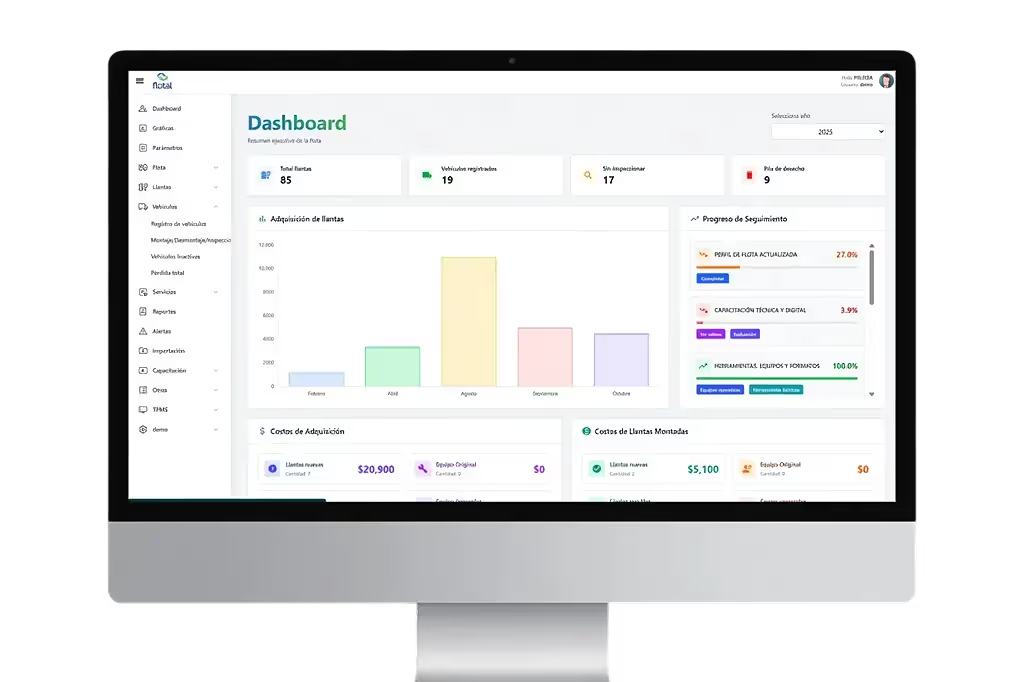
FLEET TIRE COST TRACKING
Track Tire Cost Per Mile with Flotal
Organize tire inspections, tire history, rotations, retreads, removals, replacements, inventory, and cost per mile visibility across your commercial fleet.
- Track tire lifecycle records by asset and position
- Document inspections, removals and replacement reasons
- Manage retread and casing history
- Improve tire cost per mile visibility
How Often Should Fleets Review Tire Cost Per Mile?
Fleet managers should review tire cost per mile regularly, not only at the end of the tire’s life.
Useful review points include:
- After tire removal.
- After retread.
- After a roadside service event.
- After a recurring TPMS alert.
- During monthly maintenance reviews.
- During tire vendor or supplier reviews.
- Before changing tire brands or models.
Reviewing tire cost per mile consistently helps the fleet detect cost problems earlier and make better purchasing, retreading, and maintenance decisions.
Fleet Tire Cost Per Mile Checklist
Use this checklist to improve tire cost per mile tracking:
- Assign a unique ID to every tire.
- Record purchase price and installation cost.
- Track vehicle, asset, and tire position.
- Record mileage at installation.
- Track inspections and tread depth readings.
- Document pressure checks and TPMS-related events.
- Record rotations and position changes.
- Add repair and retread costs.
- Track casing history.
- Record removal mileage.
- Document the removal reason.
- Calculate tire cost per mile by tire, unit, position, and application.
- Compare tire performance over time.
Final Recommendation
Tracking tire cost per mile helps commercial fleets understand the real value of their tires. It shows whether tires are lasting long enough, whether maintenance actions are working, and whether tire replacements are planned or reactive.
For U.S. commercial fleets, the strongest process combines tire inspections, TPMS visibility, tire history, retread tracking, replacement records, and structured cost data.
HawksHead TPMS helps drivers monitor tire pressure and temperature in real time. Flotal helps fleet managers organize tire lifecycle data, including inspections, rotations, retreads, removals, replacements, inventory, and cost per mile visibility.
If your fleet wants better tire cost control, request a Flotal demo and start tracking tire performance with a system built for commercial fleet operations.
Frequently Asked Questions About Tire Cost Per Mile
What is tire cost per mile?
Tire cost per mile is a fleet metric that compares tire cost against the number of miles the tire delivered. It helps fleets measure tire value over time instead of looking only at purchase price.
How do you calculate tire cost per mile?
The basic formula is total tire cost divided by total miles driven. For a more accurate fleet calculation, include repairs, retreads, roadside service, labor, premature removals, casing value, and other tire-related costs.
Why should fleets track tire cost per mile?
Fleets should track tire cost per mile because it helps compare tire performance, identify recurring tire problems, evaluate retreads, improve replacement timing, and control tire lifecycle costs.
Does TPMS calculate tire cost per mile?
TPMS does not usually calculate tire cost per mile by itself. TPMS monitors tire pressure and temperature. Tire management software helps connect tire events, inspections, replacements, retreads, and cost records.
Can tire management software help track tire cost per mile?
Yes. Tire management software helps organize tire IDs, tire history, inspections, position changes, retreads, removals, replacements, inventory, and cost data needed to track tire cost per mile.
What costs should be included in tire cost per mile?
Fleet tire cost per mile may include tire purchase price, installation, repairs, retreads, roadside service, labor, disposal, premature removal costs, and casing value.
Is tire cost per mile better than tire purchase price?
Yes. Purchase price only shows what the tire costs upfront. Tire cost per mile shows how much value the tire delivers over its service life.
How does Flotal help with tire cost tracking?
Flotal helps fleets track tire inspections, tire history, rotations, retreads, removals, replacements, inventory, and cost per mile visibility across multiple vehicles and assets.
Should fleets still perform manual inspections if they use TPMS?
Yes. NHTSA states that TPMS is not a substitute for regular tire maintenance. Fleets should still perform inspections, pressure checks, tread checks, and maintenance reviews.

